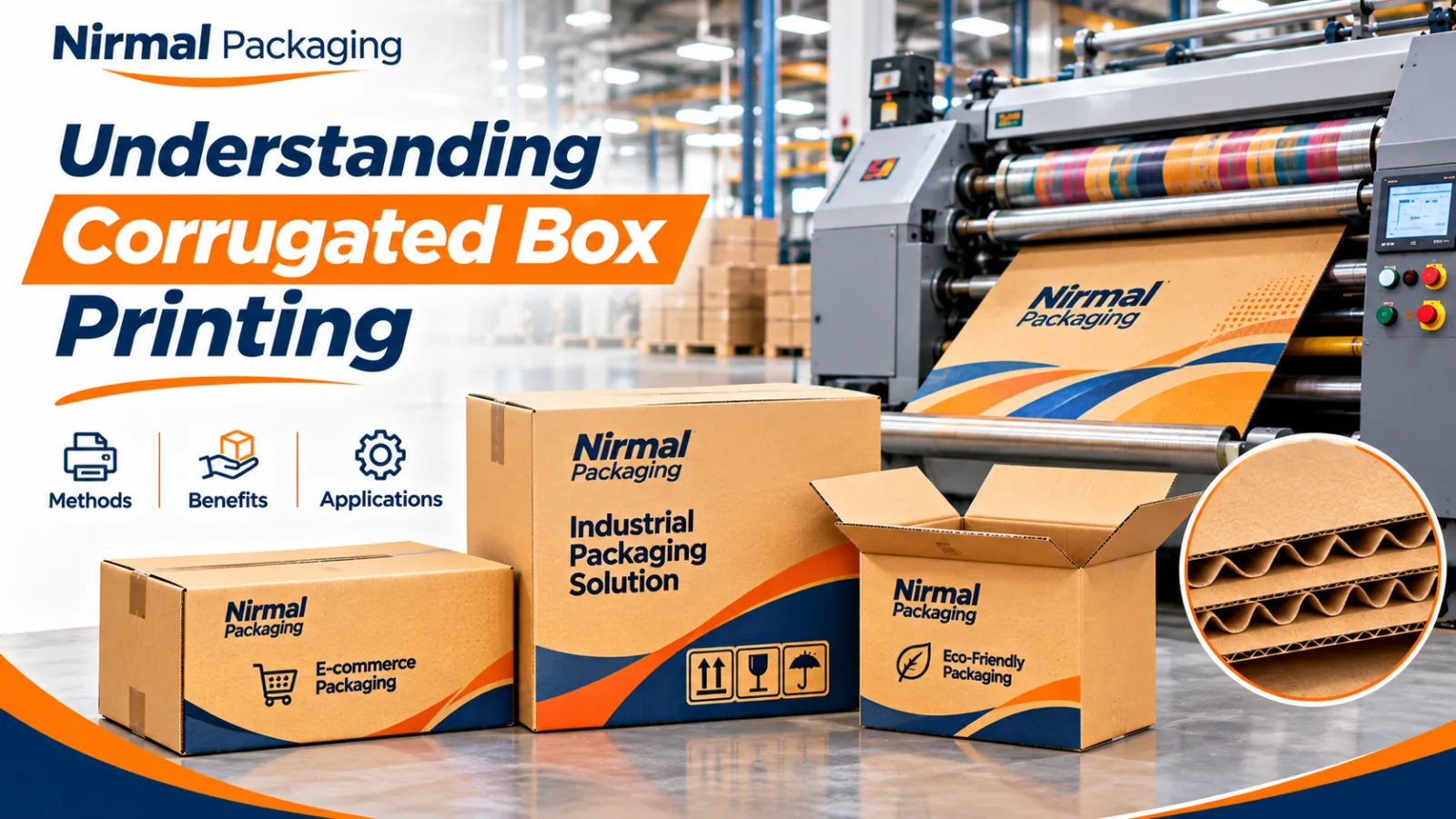
Have you ever noticed how some packaging boxes carry clear brand logos, product details, and attractive designs while others use simple printed information? Corrugated box printing helps businesses turn ordinary packaging into a useful branding and communication tool.
Corrugated boxes are widely used for packaging, storage, and transportation across different industries. Printing adds important information to these boxes while helping businesses create a consistent brand identity.
Choosing the right printing method is important because it can affect print quality, appearance, production cost, and packaging requirements.
In this guide, we will explore different corrugated box printing methods, their benefits, applications, and factors to consider when choosing a printing solution.
What Is Corrugated Box Printing?
Corrugated box printing is the process of applying text, logos, images, product details, and other designs to corrugated packaging.
It allows businesses to display their brand identity and communicate important information directly on packaging.
Printed details may include:
Company name and logo.
Product descriptions and specifications.
Handling instructions.
Shipping and storage information.
Barcode and identification details.
Marketing messages and brand colours.
The printing method depends on the box material, artwork, order quantity, budget, and required print quality.
Different Methods of Corrugated Box Printing
Several printing methods are used for corrugated packaging. Each method has different features and production requirements.
1. Flexographic Printing
Flexographic printing is one of the commonly used methods for corrugated boxes. It uses flexible printing plates to transfer ink onto the packaging surface.
The plates are prepared according to the required artwork and mounted on a printing machine.
Key features:
Suitable for printing on corrugated packaging.
Supports logos, text, symbols, and basic graphics.
Useful for medium and large production runs.
Can support multiple colours depending on the machine setup.
Flexographic printing is commonly used for shipping cartons, industrial packaging, and retail packaging.
2. Digital Printing
Digital printing transfers artwork directly from a digital file onto the packaging material without requiring conventional printing plates.
It can be useful when businesses need customised designs, shorter production runs, or multiple artwork variations.
Key features:
Supports customised designs.
Suitable for short production runs.
Makes artwork changes easier.
Can reduce the need for printing plates.
Digital printing may be considered for promotional packaging, product samples, and customised packaging requirements. Availability and suitability depend on the equipment and material.
3. Offset Printing
Offset printing transfers ink from a printing plate to a rubber blanket and then onto a printing surface.
For corrugated packaging, offset printing is commonly used in a process where printed sheets are laminated or mounted onto corrugated board.
Key features:
Supports detailed graphics and images.
Suitable for high-quality printed designs.
Offers good colour reproduction.
Can be used for premium retail packaging.
It is often considered when the visual presentation of packaging is an important part of the product experience.
4. Screen Printing
Screen printing uses a mesh screen and a stencil to transfer ink onto a surface.
It may be suitable for certain specialised packaging requirements, depending on the box material, design, and production setup.
Key features:
Can apply relatively bold designs.
Supports selected colours and artwork.
Useful for specific customised applications.
The suitability of screen printing should be evaluated against the required quantity, surface, and print specifications.
Benefits of Corrugated Box Printing
Printed corrugated boxes offer several advantages for businesses.
Better Brand Recognition
Printing a company logo, name, and brand colours on packaging helps customers recognise the business. Consistent packaging can also create a more professional brand presentation.
Improved Product Identification
Printed product names, codes, and descriptions make it easier to identify packages during storage, handling, and distribution.
Clear Handling Instructions
Boxes can display symbols and instructions such as fragile, this side up, or keep dry, where appropriate. These markings help communicate handling requirements.
Professional Packaging Appearance
Well-planned printing can improve the overall appearance of packaging and create a consistent presentation across products.
Marketing and Communication
Packaging can also communicate promotional messages, product information, and brand details to customers without requiring separate printed material.
Common Applications of Corrugated Box Printing
Corrugated box printing is used across several industries.
E-commerce Packaging
Online businesses use printed boxes to display brand names, logos, shipping information, and handling instructions.
Food and Beverage Packaging
Suitable corrugated packaging can carry product identification, branding, and other required information. Printing and packaging materials should meet the applicable requirements for the intended food-packaging application.
Electronics Packaging
Electronics businesses may use printed cartons for product identification, handling symbols, and transportation information.
Pharmaceutical Packaging
Printed corrugated cartons can help identify products and communicate relevant handling or storage information. All required information must follow applicable industry and regulatory requirements.
Retail and Consumer Goods
Retail brands use printed packaging to display product details, branding, and visual designs that support product presentation.
Industrial Packaging
Manufacturing businesses use printed cartons to identify parts, components, batches, and handling requirements.
Factors to Consider When Choosing a Printing Method
Selecting a suitable printing method requires understanding your packaging and business requirements.
1. Design Complexity
Simple logos and text may require a different printing setup compared with detailed graphics, multiple colours, or photographic designs.
2. Order Quantity
The number of boxes required can influence the most suitable printing process. Compare setup costs and per-box costs for your expected quantity.
3. Print Quality
Consider the clarity of text, consistency of colours, image detail, and overall appearance required for your packaging.
4. Box Material and Surface
Corrugated boards have different flute structures and surface characteristics. The printing process should be compatible with the selected board and its surface.
5. Budget
Compare the total cost, including artwork preparation, setup, printing, and any additional finishing or lamination requirements.
6. Production Timeline
Check the expected production time, especially when packaging is required for a product launch, seasonal demand, or a scheduled shipment.
7. Printing Requirements
Decide which details must appear on the box, such as logos, product information, barcodes, handling symbols, or shipping instructions.
Common Mistakes to Avoid in Corrugated Box Printing
Businesses should pay attention to artwork and production details before approving printed packaging.
Avoid these common mistakes:
Using low-resolution logos or images.
Choosing colours without considering the board surface.
Placing important text too close to folds or edges.
Ignoring barcode readability.
Not checking the final artwork before production.
Selecting a printing method without considering order quantity.
Overlooking the compatibility of ink and packaging material.
Failing to request a sample or print proof when required.
Reviewing the artwork and approving a sample can help identify issues before the full production run.
Frequently Asked Questions
Which printing method is commonly used for corrugated boxes?
Flexographic printing is commonly used for corrugated boxes, particularly for logos, text, symbols, and basic graphics. Other methods may be suitable depending on design and production requirements.
What is the difference between flexographic and digital printing?
Flexographic printing uses flexible printing plates to transfer ink, while digital printing applies artwork directly from a digital file. The suitable option depends on order quantity, design, equipment, and budget.
Can corrugated boxes be printed in multiple colours?
Yes. Multiple-colour printing is possible, depending on the printing method, machine capabilities, artwork, and packaging material.
Is custom printing available for corrugated boxes?
Custom printing can include company logos, product details, brand colours, handling instructions, and other required artwork. The available options depend on the manufacturer's printing facilities.
Does printing affect the cost of corrugated boxes?
Yes. Printing costs can depend on the method, number of colours, artwork complexity, order quantity, and additional finishing requirements.
Conclusion
Corrugated box printing helps businesses combine packaging, product identification, and brand communication in one solution. From simple shipping cartons to detailed retail packaging, different printing methods support different business requirements.
Understanding flexographic, digital, offset, and screen printing can help businesses compare available options and select a suitable process.
Before finalising an order, review the artwork, printing quality, material compatibility, production quantity, and overall cost.
For corrugated packaging and customised box requirements, explore the solutions offered by Nirmal Packaging.

Nirmal Packaging Industries
Est. 2011 • C-192, Sec-10, Noida — Manufacturer of corrugated boxes & industrial packaging solutions.