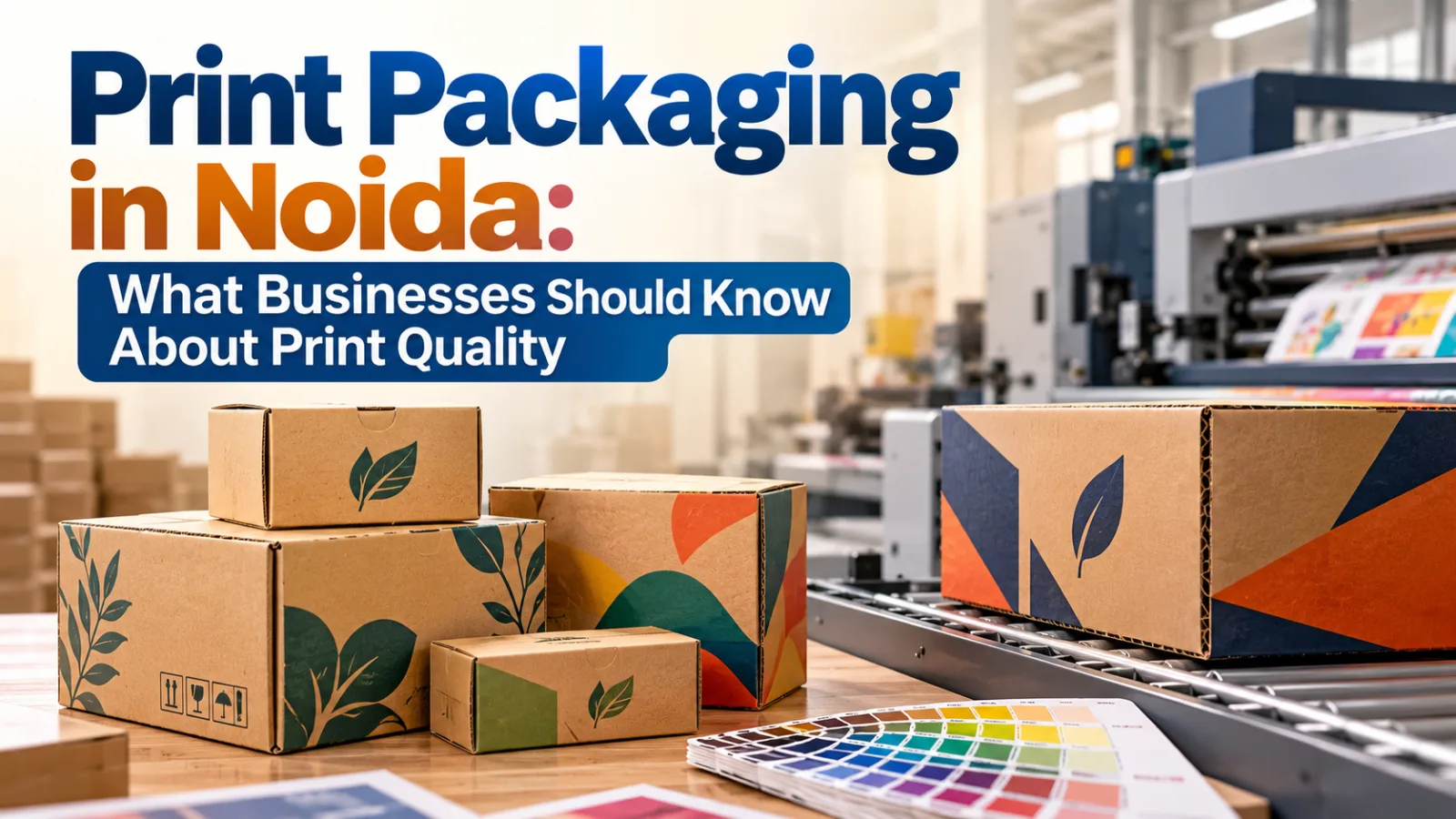
A printed box looks simple enough, a logo, maybe some brand colours, applied onto a corrugated surface. But the actual print quality you end up with depends on a surprising number of technical factors, many of which business owners never think about until they’re disappointed with a batch that looked sharp on screen but came out blurry, inconsistent, or faded on the actual box. If you’re considering Print Packaging in Noida for your business, here’s what genuinely affects the final result.
Why Print Quality Varies So Much Between Suppliers
Printing on corrugated material is fundamentally different from printing on smooth paper or plastic. The surface itself is slightly textured, which affects how ink sits and spreads. Combine this with differences in printing method, ink quality, and the skill level of the production team, and it becomes clear why two suppliers quoting the same price can deliver noticeably different results.
What Actually Affects Print Quality
The Printing Method Used
Flexographic printing is the most common method for corrugated boxes, using flexible printing plates. It’s cost-effective for bulk runs but can produce slightly softer, less sharp detail compared to other methods, fine for logos and simple designs, less ideal for intricate, detailed artwork.
Offset printing on pasted boxes typically delivers sharper, more detailed results, closer to what you’d see on smooth paper printing. This method usually costs more but suits businesses wanting a more premium, polished finish for Custom Packaging Boxes.
Digital printing has become more accessible for smaller runs, offering good detail without the setup costs of traditional plate-based methods, though it may not always match offset quality for very large volumes.
The Quality of the Board Itself
A smoother, higher-quality board surface takes print far better than a rough, lower-grade one. If your supplier is cutting costs on base material to offer a lower price, your print quality will likely suffer regardless of how good their printing equipment is.
Ink Quality and Colour Consistency
Lower-quality inks can fade faster, appear less vibrant, or shift slightly in colour between batches. If brand colour consistency matters to you, ask your supplier directly about their ink sourcing and how they maintain colour accuracy across different production runs.
The Resolution of Your Original Design File
This is a common, easily avoidable mistake. Submitting a low-resolution logo or design file, even to an excellent printer, will result in a blurry, pixelated final print. Always provide your artwork in a high-quality, properly formatted file, and ask your supplier what resolution and format they actually need.
Plate and Setup Quality
For flexographic printing specifically, the quality of the printing plate itself affects how crisp the final result looks. Worn or poorly made plates produce softer, less defined prints, regardless of how good the ink or board is.
Common Print Quality Problems and What Causes Them
Blurry or Soft Edges
Usually caused by a low-resolution source file, a worn printing plate, or a board surface that isn’t smooth enough to hold fine detail properly.
Inconsistent Colour Across a Batch
Often linked to ink quality issues, or inconsistent mixing between production runs. Ask your supplier specifically how they ensure colour matches across a large order.
Print That Fades or Scuffs Easily
This can point to lower-quality ink, or insufficient drying time before boxes are handled and stacked during production.
Misaligned Printing on the Box
Usually a setup or calibration issue during production, worth flagging immediately if you notice it on a sample, since it’s a sign of rushed or careless production control.
What to Check Before Placing a Bulk Print Order
Always Request a Physical Sample First
Never approve a design purely from a digital mockup. Colours and sharpness look different in person than on a screen, and a physical sample is the only real way to confirm quality before committing to a full batch.
Ask About Their Printing Method
Understanding whether they use flexographic, offset, or digital printing helps set realistic expectations for the level of detail and finish you’ll actually receive.
Confirm File Requirements Upfront
Ask exactly what resolution, format, and colour profile they need for your artwork, submitting the wrong format is one of the most common, avoidable causes of poor print results.
Ask How They Maintain Consistency Across Large Orders
A good Corrugated Box Manufacturer in Noida/Delhi should be able to explain their quality control process for print consistency, not just reassure you vaguely that “it’ll look great.”
A Simple Checklist Before You Order
Prepare your artwork in a high-resolution, properly formatted file
Ask your supplier which printing method they’ll use for your order
Request a physical sample before approving a bulk print run
Confirm how colour consistency is maintained across a larger batch
Check the base board quality, not just the printing process itself
Frequently Asked Questions
Q: Does custom printing work on both cardboard and corrugated boxes?
Yes, though the results differ slightly. Cardboard’s smoother surface generally takes finer, sharper detail than corrugated board, which has a naturally textured surface. Both can look genuinely good, but expectations should be set accordingly.
Q: How many colours can I use in my design?
This depends on the printing method and your budget. Single or two-colour designs are the most cost-effective and widely used for small businesses. Full-colour, detailed designs are possible but typically cost more and work best with offset or digital printing methods.
Q: What’s the minimum order quantity for printed packaging?
This varies by supplier and printing method, flexographic printing typically requires a higher minimum due to plate setup costs, while digital printing can often accommodate smaller runs more affordably.
Q: Can I see my design on the actual box before a full bulk order?
You should always be able to, and should insist on it. A reliable Packaging Boxes in Noida/Delhi supplier will provide a sample or proof before moving to full production.
Q: Will the print colour match exactly what I see on my screen?
Not always exactly, screen colours and printed colours can differ slightly due to how each medium displays colour. Ask your supplier for a physical colour proof if exact brand colour matching is important to you.
Q: Does print quality affect the box’s structural strength?
No, printing is a surface-level process and doesn’t typically affect the corrugated board’s strength, as long as the base material itself remains good quality.
Final Thoughts
Good print quality on Personalized Packaging Boxes isn’t accidental, it depends on the printing method used, the quality of the board and ink, and how carefully your design file is prepared and handled. Asking the right questions upfront, and always testing with a physical sample, saves you from discovering quality issues only after a full bulk order has already arrived.
If you’re exploring Print Packaging in Noida for your business, reach out to Nirmal Packaging. Share your design requirements and expected order volume, and the team can walk you through realistic print quality options that genuinely fit your budget and brand needs.

Nirmal Packaging Industries
Est. 2011 • C-192, Sec-10, Noida — Manufacturer of corrugated boxes & industrial packaging solutions.